TL;DR
- B2B organic search performance is no longer just rankings and traffic: it spans SERP presence, technical health, on site behavior, off site authority, and revenue contribution together.
- Five metric categories anchor a complete evaluation: organic visibility and SERP presence, technical SEO health, post click engagement, unlinked brand mentions and authority, and business outcomes.
- A real SEO audit runs in a fixed sequence: technical foundations first, then competitive benchmarking, content and authority, landing page behavior, revenue attribution, and finally prioritized fixes.
- Core Web Vitals, crawlability, and indexing still decide whether content can rank at all, no matter how strong the keyword strategy sitting on top of it looks.
- Connecting organic search to pipeline requires CRM data, a clearly stated attribution model, and tracking that separates a newsletter signup from a real sales inquiry.
- As AI reshapes how buyers search, a B2B SEO performance evaluation increasingly needs to sit alongside an AI search visibility tool, not replace it.
A B2B marketing team can point to a keyword ranking on page one, a traffic chart trending up and to the right, and still have no real answer when a CFO asks what organic search is actually worth to the pipeline. That gap, between search metrics that look good and a business case that holds up, is where most SEO performance evaluations quietly fail: they measure activity instead of outcome, and a single visibility number instead of the five connected layers that decide whether organic search is actually working.
A proper B2B organic search visibility and SEO performance evaluation covers all five of those layers together: how visible a site is across the results page, how technically sound it is, how visitors behave once they land, how much authority it holds beyond its own domain, and how directly that visibility turns into qualified leads and closed revenue. It also runs through a defined audit rather than a single dashboard glance, since a technical problem hiding underneath a strong keyword strategy, or a backlink profile disconnected from what actually shows up in the CRM, rarely surfaces in a quick check.
This guide breaks the full evaluation into two parts: the key metrics that describe B2B SEO performance completely, and a six step audit process for measuring all of it in the right order, from confirming pages are indexed through tracing organic visitors all the way to closed deals.
B2B SEO as AI Reshapes Search: Turning Organic Visibility Into Measurable Business Growth
B2B SEO now has to prove its value twice: once in the traditional sense, does a site rank, get clicked, and convert, and once against a search landscape where a growing share of buyer research happens inside an AI generated answer instead of a list of blue links. Proving that value means treating both halves as one evaluation rather than two separate projects: the classic mechanics of rankings, technical health, and on site behavior, tied directly to leads, pipeline, and revenue instead of reported as traffic for its own sake.
Search engines still send more B2B website traffic than any other channel. Data from BrightEdge puts organic search at roughly three quarters of all trackable B2B website traffic, comfortably ahead of paid search and social combined, which is exactly why an SEO performance evaluation carries real weight in a marketing budget conversation. At the same time, the page a buyer lands on no longer looks the way it did even two years ago. AI generated answers now sit above or beside traditional listings for a growing share of B2B research queries, and a page ranking well can still lose a buyer's attention to a synthesized answer that names a competitor instead. Evaluating classic organic performance and tracking presence inside those AI generated answers through a dedicated AI search visibility tool have become two related but separate disciplines, and a B2B team that only checks one is working from half the picture. What makes a brand discoverable to AI search in the first place is the natural companion question sitting next to everything the rest of this guide covers.
None of that is measurable without a clear set of metrics to run it against, which is where a complete B2B SEO performance evaluation actually starts.
Key Metrics for Evaluating B2B SEO Performance
Five categories of metrics describe B2B SEO performance completely, each one answering a question the others cannot. Skipping a category does not just leave a gap in a report. It hides a specific kind of failure: strong rankings sitting on a page too slow to convert, or heavy traffic that never gets tracked past a form fill and into a closed deal.
Organic Search Visibility, SERP Presence & Visibility Score
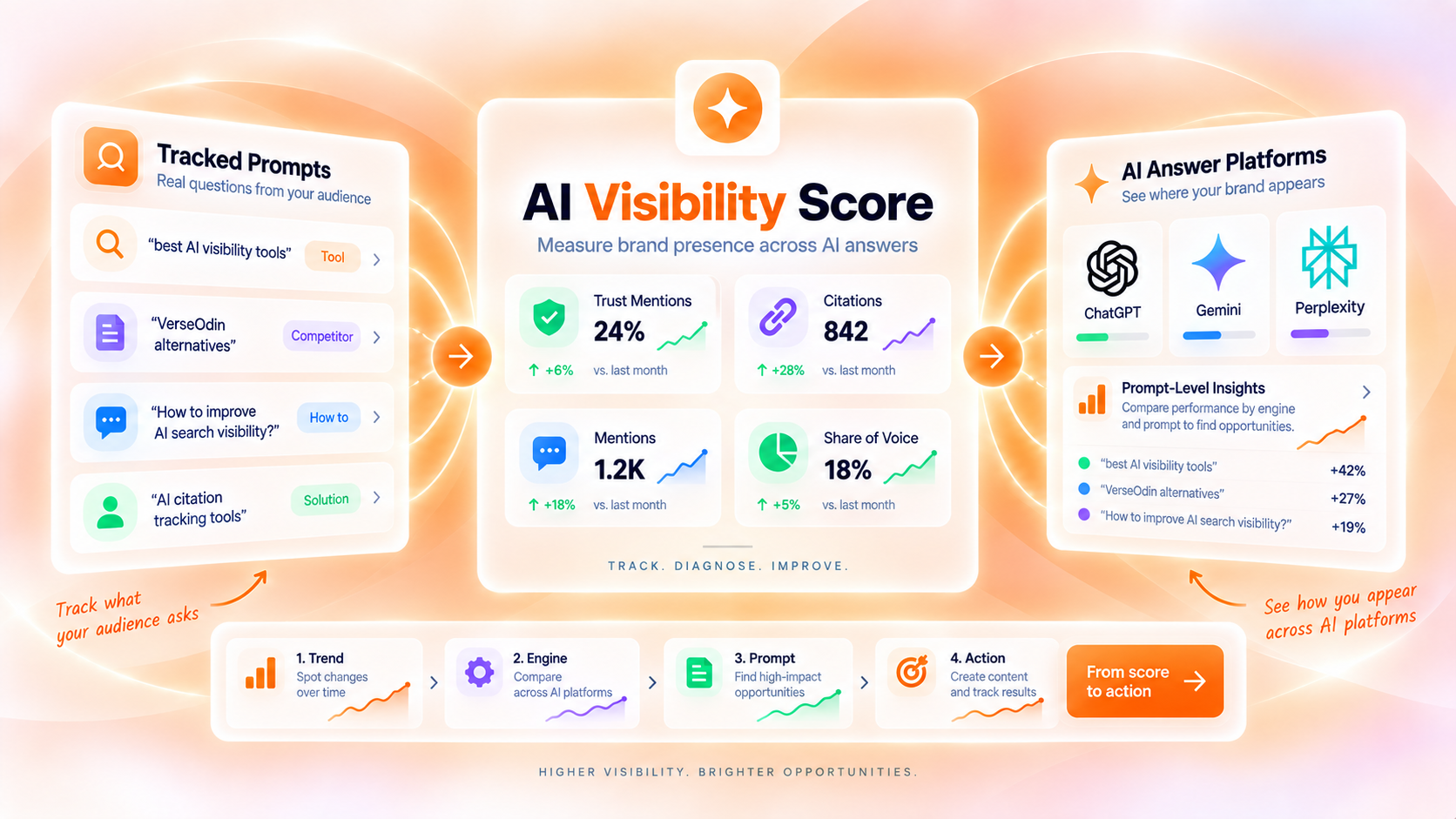
Organic search visibility starts with the basics a search console already reports: impressions, clicks, click through rate, and average position for the keywords that matter to the business, tracked separately for branded and nonbranded queries since the two describe very different kinds of demand. A visibility score turns that raw data into one comparable number, typically a weighted measure of how often a domain appears across a defined keyword set and how prominently it appears, which makes it possible to track overall organic presence the same way a rank tracker follows one keyword.
SERP presence goes beyond the traditional ten blue links. Featured snippets, People Also Ask boxes, image and video results, and AI generated answers now compete for the same space a plain organic listing used to have to itself, and a brand can hold position one while still losing most of the visible page to those other features. A closer look at SERP monitoring covers how to track that fuller picture, feature by feature, on an ongoing basis rather than a single evaluation pass.
Technical SEO Health & User Experience
Technical SEO health measures whether search engines and AI crawlers can actually reach, render, and understand a site before any ranking question even applies. Crawlability, correct indexing, clean canonical tags, and a working sitemap form the floor everything else stands on: content built perfectly for a target keyword still fails to rank if the page sits behind a blocked robots directive or a redirect chain that never resolves.
User experience sits directly inside this category through Core Web Vitals. Google's current thresholds hold at Largest Contentful Paint under 2.5 seconds, Interaction to Next Paint under 200 milliseconds, and Cumulative Layout Shift under 0.1, each measured at the 75th percentile of real visitor data rather than a single lab test. Mobile usability and accessibility round out the category, since a page that scores well on desktop but breaks on a phone is failing the device most B2B buyers actually use for that first research visit.
Post Click Engagement & User Behavior
Post click engagement measures what happens after a visitor actually lands on the page, the piece a rank tracker or a visibility score can never show on its own. Engagement rate, average session duration, scroll depth, and pages per session together describe whether a page holds attention or gets abandoned within seconds, and a page that ranks well while bleeding visitors almost immediately has a content or experience problem no keyword report will ever surface.
Navigation paths matter just as much as time on page. Session recordings and heatmaps show exactly where a visitor's attention goes, which calls to action get ignored, and where a form starts losing people field by field, turning a vague sense that conversion rate is low into a specific, fixable point of friction.
Unlinked Brand Mentions & Authority
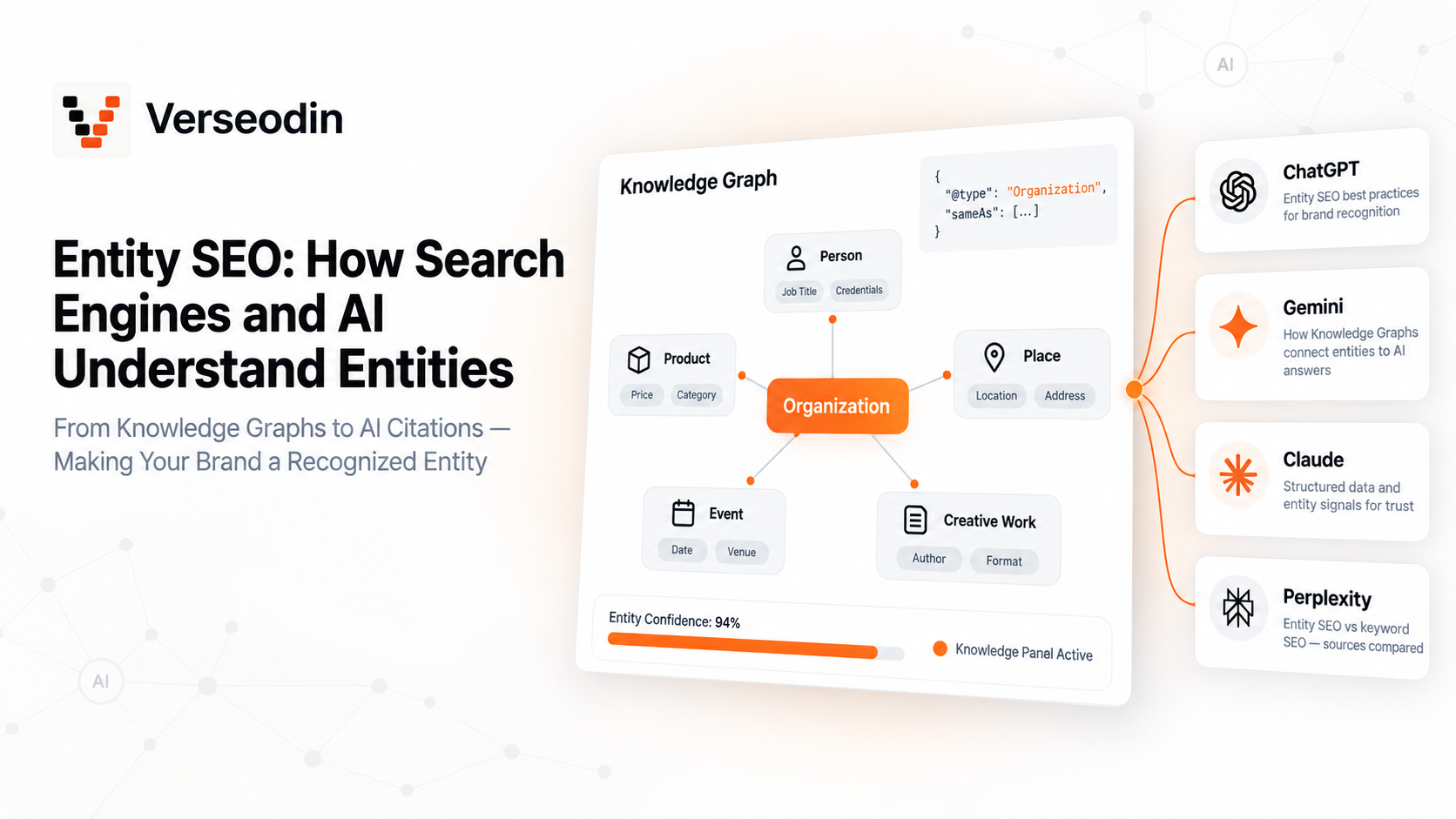
Backlinks remain one of the clearest signals of authority a site can earn, but a large share of the coverage a brand actually gets never comes with a link attached. An unlinked brand mention, a name dropped in an article, a roundup, or a comparison piece with no hyperlink back to the site, still shapes how search engines and AI systems judge whether a brand counts as a recognized, citable entity in its category, even without passing any direct link equity. Reviewing both together, linked and unlinked, gives a far more complete authority picture than a backlink report alone, and it connects directly to how Google evaluates trust and authority signals across organic and AI generated results alike.
Auditing unlinked mentions surfaces two kinds of opportunity at once: outreach targets where a simple, polite request can turn an existing mention into a real link, and accuracy problems where a mention gets a brand's name, product, or positioning wrong in a way worth correcting before it spreads any further.
Business Outcomes: Leads, Pipeline & Revenue Contribution
None of the categories above matter to a budget conversation until they connect to leads, pipeline, and revenue. Business outcome metrics track qualified form submissions, demo requests, and sales inquiries that originate from organic search, kept clearly separate from lower intent actions like a newsletter signup or a resource download that share the same tracking setup but mean something very different to a sales team.
The real work is connecting that acquisition data to what happens afterward in the CRM: which organic leads turn into sales opportunities, which of those close, and how long that whole path takes. That connection is what finally lets you evaluate your SEO performance the way the rest of the business gets evaluated, in pipeline and revenue terms rather than clicks.
Evaluate B2B Organic Search Visibility and SEO Performance: A Step by Step Audit
Turning those five metric categories into an actual evaluation takes a defined sequence, not a random walk through whichever dashboard happens to be open first. The following six steps run in the order that makes each one useful: technical problems get fixed before anyone benchmarks visibility on top of a broken foundation, and revenue only gets connected once the traffic and engagement data underneath it can actually be trusted.
1. Audit Technical Health and Indexing Foundations
A technical audit comes first because nothing above it means much if a page cannot get crawled, indexed, and rendered correctly in the first place.
- Check whether important pages are crawlable and indexed, reviewing sitemap coverage, robots directives, canonical tags, redirects, and server errors along the way, using Search Console's own coverage and indexing reports as the primary source for all of it.
- Assess Core Web Vitals, mobile usability, accessibility, and loading performance across every key page template, not only the homepage.
- Validate relevant structured data and internal links, prioritizing issues on product, service, and conversion pages over lower value blog content.
2. Benchmark Organic Visibility Against Competitors
Visibility only means something relative to who else is competing for the same buyer's attention.
- Group target queries by product, service, buyer intent, and funnel stage, evaluating branded and nonbranded searches separately since they represent very different kinds of demand.
- Compare impressions, clicks, click through rate, visibility scores, and share of voice against the search competitors actually contesting those same queries, not only the obvious industry rivals.
- Review presence in featured snippets, People Also Ask, AI generated answers, image results, and video results to identify exposure a standard ranking report never shows.
3. Evaluate Content Performance and Brand Authority
Content and authority together decide whether a site earns the click and the credibility, not just the impression.
- Identify declining content, outdated information, mismatched search intent, and pages that are quietly competing against each other for the same queries.
- Find gaps across the full B2B buying journey, including educational content, solution pages, comparisons, and case studies that a later stage buyer needs and cannot currently find.
- Review relevant backlinks and unlinked brand mentions for coverage gaps, inaccurate brand descriptions, and realistic outreach opportunities worth pursuing first.
4. Analyze Organic Landing Pages and Conversion Friction
A page can win the ranking and the click and still lose the visitor before anything resembling a conversion happens.
- Segment organic visitors in GA4 by landing page, device, geography, and any audience characteristic that meaningfully changes behavior.
- Examine engagement and navigation paths from informational content through to product pages, demo requests, and contact forms, watching for exactly where that path breaks down.
- Use heatmaps and session recordings to investigate confusing navigation, ignored calls to action, repeated clicks, and form friction that a conversion rate number alone cannot explain.
5. Connect Organic Search to Qualified Leads, Pipeline, and Revenue
This is the step most SEO evaluations skip entirely, and the one that actually earns organic search its place in the budget.
- Verify tracking for meaningful actions first, keeping a newsletter subscription or a resource download clearly separate from a demo request or a direct sales inquiry.
- Connect acquisition data with CRM records to evaluate lead quality, sales opportunities, closed deals, and time to conversion for the traffic organic search actually sends.
- Explain how organic search initiates, assists, or completes a conversion journey, and state plainly which attribution model that read is based on. GA4's own Key event attribution paths report splits a conversion path into early, mid, and late touchpoint segments, and shows exactly how credit gets divided across them under whichever attribution model is selected.
Try it with your own website
Check whether AI engines can reach, read and recommend your pages.
6. Diagnose Performance Changes and Prioritize Improvements
An evaluation that ends without a prioritized action list is a report, not an audit.
- Investigate any decline by page group, query, device, and market before assuming a single cause, checking recent technical changes, seasonality, and shifts in underlying search demand along the way.
- Rank fixes and content opportunities by business impact, number of pages affected, confidence in the diagnosis, and how much implementation effort each one actually takes.
- Assign an owner, a deadline, and a success measure to every item on that list, then monitor whether the change actually moves visibility, qualified leads, and pipeline contribution, not just rankings.
Frequently Asked Questions
How often should a B2B company evaluate its SEO performance?
A full evaluation makes sense on a quarterly cadence for most B2B sites, since organic changes take weeks to show up in ranking and traffic data and even longer to show up in pipeline. A lighter technical check, crawl errors, Core Web Vitals, and any sudden ranking or traffic drop, is still worth running monthly so a real problem never sits unnoticed for a full quarter before anyone catches it.
What counts as a good organic visibility score for a B2B website?
There is no universal number, since a visibility score depends entirely on the size and competitiveness of the keyword set it gets built from. The more useful benchmark is a site's own trend against its own history and against that same score calculated for its named competitors on an identical keyword list, since that comparison is what actually shows whether visibility is improving relative to who it is competing against.
How is an SEO audit different from ongoing SEO monitoring?
An audit is a defined, point in time evaluation that runs through every metric category once and ends in a prioritized list of fixes. Monitoring is the continuous tracking that runs between audits, watching for a ranking drop, a lost featured snippet, or a Core Web Vitals regression as it happens rather than once a quarter. Most B2B teams need both: an audit to set direction and monitoring to catch a problem before the next scheduled audit would have found it.
What is an unlinked brand mention, and how does it affect authority?
It is any instance of a brand, product, or executive name appearing in an article, forum thread, or roundup where the publisher never added a link back to the site. Search engines and AI systems still weigh it as a real world signal, since the mention itself, not only the link, is evidence that other sources consider the brand worth naming.
How do you tie organic search to pipeline and revenue without perfect attribution?
Exact, deterministic attribution is rare for any channel, not only organic search, so the practical fix is choosing one attribution model in GA4, applying it consistently, and pairing it with CRM data that shows which opportunities and closed deals actually trace back to an organic first touch. A brief intake question on demo or contact forms about how a prospect found the company adds a useful second data point, but the CRM linkage is what carries most of the weight once volume is high enough to show a real pattern.