A brand can dominate page one of Google and still be completely invisible the moment someone asks ChatGPT or Gemini the exact same question. That gap is not a glitch. It is the new reality of how people are starting to find businesses, and it is opening up faster than most marketing teams have had time to adjust to.
This guide is about how to improve brand visibility in ai generated answers specifically, covering why the discipline has become its own priority worth tracking, what a real monitoring setup actually needs to do, and where the market's solutions genuinely differ from each other. It walks through concrete steps for ChatGPT, a separate playbook for Gemini given its place inside Google's much larger AI ecosystem, the handful of metrics that actually matter, and what a long term strategy looks like once a brand moves past a one time audit. Throughout, it also shows how Verseodin turns each of these pieces, tracking, benchmarking, and closing gaps, into a repeatable system rather than a one off check.
Why Brand Visibility in AI Search Is the New SEO Frontier
For two decades, being visible online meant ranking on Google. That single goal shaped nearly every marketing budget, every content calendar, and every technical audit a brand ran. That goal has not disappeared, but it has stopped being the whole story. A growing share of people now ask ChatGPT, Gemini, or another AI system a question directly instead of typing it into a search box, and what comes back is not a page of ten links to evaluate. It is a single answer, sometimes with a brand's name in it, sometimes without, and there is rarely a page two to fall back on.
Independent research on generative engine optimization, including a widely cited 2024 study from Princeton, Georgia Tech, and the Allen Institute for AI, found that structuring content specifically for AI systems can lift visibility in their answers by as much as 40 percent compared to leaving it unchanged. That points to something SEO teams have not had to reckon with before: the practices that earn a top ranking on Google do not automatically earn a mention inside an AI generated answer, because the two systems are evaluating content for entirely different purposes. A search engine hands back a ranked list and lets the person decide. An AI system decides for them, in the moment, and a brand that is not part of that decision effectively does not exist to that particular buyer.
This is why brand visibility in AI search has become the new frontier sitting right alongside, not instead of, traditional SEO. The stakes are different in a specific way too. A brand ranking eighth on Google still gets clicks from people willing to scroll. A brand missing from an AI answer usually gets nothing, because most people reading that answer never see an alternative list to scroll through at all. The specific factors that influence visibility across every major AI platform vary in ways worth understanding before building a plan around any single one of them.
Tools for Monitoring Brand Visibility in AI Interfaces Like ChatGPT
None of this is manageable without measurement, and measuring AI visibility is a different job than checking a keyword ranking. There is no dashboard built into ChatGPT that shows how often a brand gets mentioned, and asking a single question once and getting a favorable answer proves very little, since AI systems are known to generate different answers to an identical prompt run at different times.
A real monitoring setup needs to do a few specific things well. It needs to run a defined, repeatable set of prompts, the actual questions buyers would ask, rather than a single spot check. It needs to separate two signals that get blurred together constantly: whether an AI system merely mentions a brand's name, and whether it actually cites the brand's domain as a source. Both matter, but they mean different things, and a tool that only tracks one is missing half the picture. It also needs to compare a brand against its named competitors on the same prompts, since a citation rate in isolation says very little about whether a brand is actually winning or losing ground.
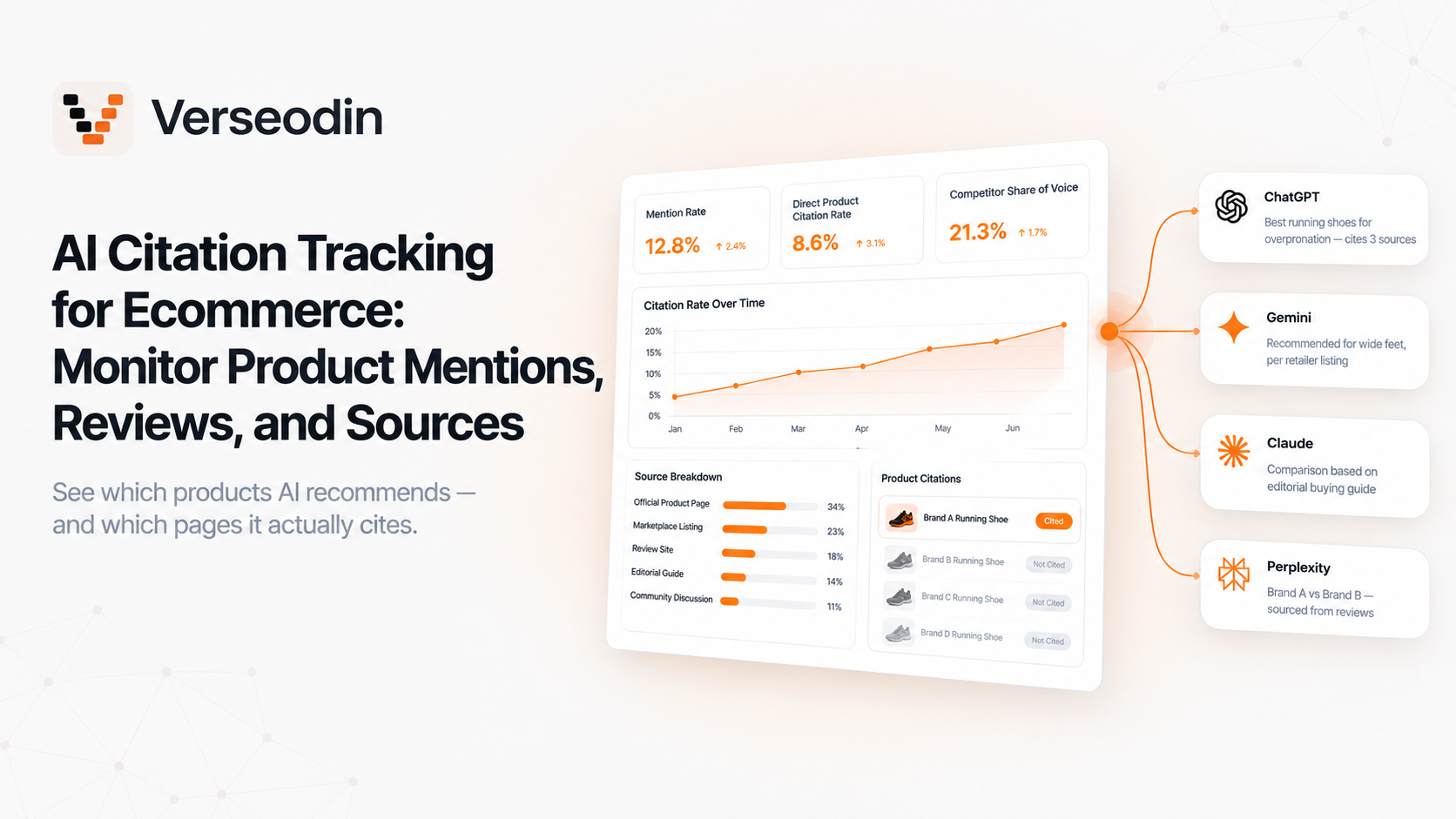
This is the core of what Verseodin does. Each tracked website becomes a universe, a defined set of prompts and named competitors checked daily across ChatGPT, Gemini, and Perplexity. For every prompt, Verseodin records whether the brand's domain was cited, whether the brand name was mentioned in the answer text, and whether both happened together, the strongest signal available, which Verseodin calls a trust mention. That distinction between a mention and a citation is exactly the one most manual spot checking misses entirely.
Top Brand Visibility Solutions for AI Search Platforms
Brands generally land on one of three approaches once visibility needs active management. The first is manual spot checking, someone on the team periodically typing likely prompts into ChatGPT or Gemini and noting what comes back. It costs nothing but time, and it does not scale past a handful of prompts or survive the natural variation between runs of the same prompt. The second is bolting AI mention tracking onto an existing SEO suite as an add on feature, which usually means shallow coverage of a narrow set of platforms and metrics designed around search rankings rather than generative answers. The third is a purpose built AI visibility platform, built from the ground up to track how brands actually get represented inside AI generated answers rather than adapting an older tool to a new problem.
Verseodin sits in that third category, and the practical difference shows up in what a team can actually see. The AI Visibility tab tracks combined citation and mention coverage over time, alongside a ranking of every competitor's trust mentions and a clear visibility rank against them. The GEO Audit tab isolates pure domain citations, while the AEO Audit tab isolates brand mentions specifically, since a brand can lead on one and lag badly on the other. Blindspot detection, arguably the single most useful view in the platform, surfaces every prompt where a competitor gets cited or mentioned and the tracked brand gets nothing at all, turning a vague sense of falling behind into a specific, prioritized list of gaps to close. For categories where discussion happens heavily outside a brand's own website, the Big Leagues view adds a dedicated look at exactly which Reddit threads and YouTube videos are earning citations in that space. Choosing the right AEO tool for a brand's specific goals covers how to weigh a purpose built platform against the other two approaches in more depth.
How to Increase Business Visibility in ChatGPT: Step by Step Strategies
ChatGPT behaves differently from other major AI platforms in one specific way worth building a strategy around: across engine comparisons, it tends to mention a brand's name in its answers more often than it links to an external source to back that mention up. That pattern should shape where effort goes first.
- Establish a real baseline. Run the actual questions a buyer would ask, comparison questions, "best X for Y" questions, direct "does this company do Z" questions, and record whether the brand appears at all, mentioned or cited, and who shows up instead.
- Lead every page with a direct answer. A model extracting an answer favors content that states its conclusion in the first few sentences over a page that builds up to it slowly.
- Earn mentions outside the brand's own website. Genuine third party coverage, comparison pages, and forum discussion carry more weight with ChatGPT than a brand describing its own strengths on its own domain.
- Confirm technical access. Make sure the site is not blocking the crawlers ChatGPT's live search depends on, since no amount of good content matters if it never gets retrieved in the first place.
- Track on a fixed cadence, not once. Recheck the same prompt set regularly rather than treating one favorable result as proof the work is finished, since citation and mention behavior shifts noticeably from run to run.
This complete guide to improving brand visibility on ChatGPT goes deeper into the specific factors that separate a mention from a miss.
How to Gain Visibility in Gemini: Optimizing for Google's AI Ecosystem
Gemini asks for a different kind of attention than ChatGPT, mainly because it does not stand alone. It is the model sitting underneath Google's AI Overviews and AI Mode, and it reaches people inside Gmail, Docs, Android, and Chrome, not only inside a standalone chat app. At Google's I/O event in May 2026, the company rolled out Gemini 3.5 Flash as the new default model powering AI Mode globally, calling it the biggest change to the search box in more than 25 years, and that same model has continued expanding into a growing share of everyday Google searches since. Whatever a brand's Gemini strategy looks like, it is really a strategy for Google's entire AI surface, not a single standalone app.
That connection changes what actually moves the needle. Gemini draws on a retrieval process that pulls content from across the web, weighs it for authority and structure, and then writes a synthesized answer, which means the underlying signals look closer to traditional Google ranking factors than ChatGPT's. Consistent entity information, the same brand description, facts, and positioning appearing the same way across a brand's own site and third party coverage, helps Gemini form a confident, stable picture of who a brand actually is. Structured data, genuine third party authority, and content that stays current all carry real weight too, and because Google controls both its AI models and its long standing content quality guidelines, signals like demonstrated expertise, real world experience, and trustworthiness appear to matter here more than on almost any other platform.
Verseodin tracks Gemini as one of its three core engines alongside ChatGPT and Perplexity, which makes it possible to see directly whether a brand's Google focused SEO work is actually translating into Gemini visibility or stalling somewhere in between.
Key Metrics to Track Your Brand's AI Search Performance
A handful of numbers matter more than the rest, and the useful version of each one compares a brand against its competitors and across platforms, not just against itself over time.
Mention rate is the simplest starting point: the share of tracked prompts where a brand's name shows up in the answer at all, regardless of whether a link comes with it. Citation rate narrows that down to prompts where the brand's actual domain gets linked as a source, which on some platforms runs meaningfully lower than the mention rate, since a model can name a brand from what it already knows without pulling a live source. Combine the two and a trust mention rate emerges, the share of prompts where both happened together, generally treated as the strongest single visibility signal available.
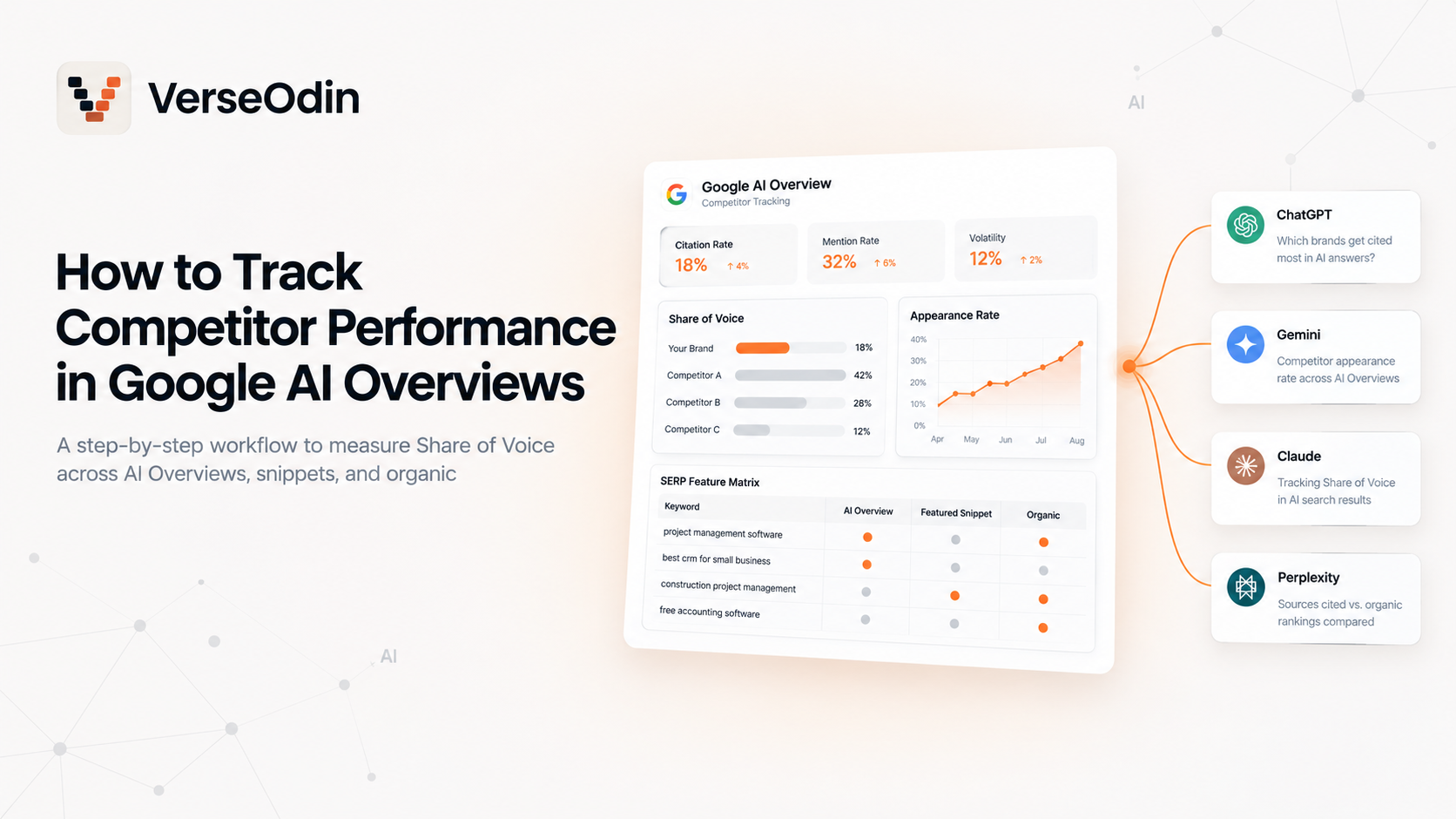
Share of voice puts a number on the competitive picture: a brand's mentions or citations as a percentage of everyone who showed up across the same prompt set, competitors included. The most actionable metric of all, though, is not a rate at all. It is a blindspot count, the number of prompts where a named competitor gets cited or mentioned and a brand gets nothing, which turns "we should probably do better here" into a specific, ranked list of exactly where to focus next.
The number worth watching most closely is not any single metric in isolation. It is the gap between the same metric measured on ChatGPT versus Gemini for the identical prompt set. A brand that leads comfortably on one platform and lags badly on the other is not looking at a measurement error, it is looking at two genuinely different audiences and retrieval systems that happen to share a prompt list, and closing that gap usually takes a different fix on each side. This complete framework for measuring GEO campaign success breaks down how to build a full reporting cadence around these numbers.
Building a Long Term AI Visibility Strategy Across ChatGPT, Gemini & Beyond
A single audit, however thorough, has a short shelf life. Models get updated, retrieval behavior shifts, and a citation that held steady for months can disappear the next time a model version changes how it selects sources. Treating AI visibility as a project with an end date is the most common mistake brands make, and it is also the easiest one to avoid, since the fix is simply treating it the way an established paid or organic search channel already gets treated: with an ongoing cadence rather than a one time fix.
That cadence should run on roughly the same rhythm across platforms, a defined prompt set tracked on a fixed schedule, with results reviewed often enough to catch a real shift but not so often that normal day to day variation gets mistaken for a trend. It should also keep expanding rather than staying fixed to whichever platform came first. ChatGPT and Gemini are the two largest surfaces today, but Perplexity, community platforms like Reddit and YouTube, and whatever comes after them all feed the same underlying goal: being part of the answer wherever someone happens to be asking the question.
Try it with your own website
See the prompts real buyers ask AI assistants in your category.
The research grounding all of this, including the widely cited Princeton, Georgia Tech, and Allen Institute for AI study on generative engine optimization, points to real, measurable visibility gains for brands that keep at this work rather than treating it as a one off. Verseodin exists to be the system that makes that ongoing work possible: one dashboard, the same prompts, tracked daily across every major engine, so the strategy stays a strategy instead of quietly turning back into guesswork.
Frequently Asked Questions
What are the best brand visibility solutions for AI search?
The strongest brand visibility solutions for ai search share three traits: they track a defined, repeatable set of real prompts rather than one off spot checks, they separate brand mentions from actual domain citations instead of treating them as the same signal, and they benchmark a brand against named competitors on identical prompts across more than one platform. Purpose built platforms like Verseodin are generally built around exactly those three requirements, while manual checking or a bolted on SEO suite feature usually satisfies only one or two.
How can I increase business visibility in ChatGPT specifically?
Start by establishing a real baseline across a defined set of buyer style prompts, since ChatGPT is known to mention a brand by name more often than it cites an external link for that brand, which means mention tracking matters as much as citation tracking here. From there, prioritize content that states its answer early, earn genuine third party coverage rather than relying on owned content alone, confirm the site is not blocking the crawlers ChatGPT's search layer depends on, and recheck the same prompts on a fixed schedule rather than treating one favorable result as proof the work is done.
Is optimizing for Gemini different from optimizing for ChatGPT?
Yes, in a meaningful way. Gemini sits underneath Google's AI Overviews and AI Mode and draws on a retrieval process closer to traditional Google ranking, which means consistent entity information, structured data, and genuine third party authority carry real weight, much like classic SEO fundamentals. ChatGPT's live search runs on a different index entirely and tends to favor brand mentions even without a linked citation. A brand can lead comfortably on one platform and lag on the other, which is why tracking them separately rather than assuming one score represents both actually matters.
What metrics actually show whether an AI visibility strategy is working?
Mention rate and citation rate are the starting point, but the combination of both, a trust mention, is generally the strongest single signal, since it means an AI system both named the brand and linked to it as a source. Share of voice shows the competitive picture, and blindspot count, the number of prompts where a competitor appears and a brand does not, is usually the most actionable number of all, since it points directly at where to focus next rather than just describing overall performance.
How often should a brand monitor its visibility across ChatGPT and Gemini?
Daily tracking of a fixed, repeatable prompt set is the standard a purpose built platform like Verseodin runs on, but a brand does not need to review results every single day to benefit from it. Checking in every week or two is usually enough to catch a real shift in mentions, citations, or blindspots without mistaking normal short term fluctuation for an actual trend, and it keeps the strategy responsive to model updates that can change citation behavior with little warning.