Google Gemini is no longer a single chatbot in a separate tab. It sits inside Google Search, Android, Gmail, Docs, and a dedicated app used by hundreds of millions of people, which means the way Gemini talks about a brand now shapes buying decisions long before anyone opens a website. For marketing and SEO teams, that raises one direct question: when someone asks Gemini about your category, does your brand get named, and does Gemini point back to your site as a source?
This is where answer engine optimization (AEO) comes in. AEO is the practice of shaping content, structure, and trust signals so AI systems like Gemini mention and cite a brand inside a generated answer, rather than simply ranking a page on a results list. That shift is a core part of AI search visibility today, and it is exactly why Google Gemini visibility now gets tracked as its own line item instead of being folded into general SEO reporting. Google Gemini optimization has its own version of the playbook, since Gemini leans on Google's existing search infrastructure while adding its own retrieval and synthesis layer on top.
This guide breaks down what actually moves the needle for brand visibility in Gemini: the practical AEO strategies worth prioritizing first, how prompt context and search intent change what Gemini surfaces, the content types that earn the most Gemini citations, the underlying factors Gemini uses to select its sources, and better ways to measure Gemini AI citations and brand mentions over time.
Practical AEO Strategies to Improve Your Brand Presence in Gemini
Before getting into the mechanics of how Gemini works, here is where to focus first if the goal is simply to optimize content for Gemini as efficiently as possible. Any workable AEO strategy for Gemini rests on the same handful of building blocks below, which consistently move brand visibility in Gemini based on how the system actually retrieves and synthesizes information.
- Strengthen the SEO foundation Gemini already leans on: Gemini's grounding process runs a live Google Search before it writes an answer, so technical health, indexation, and a clean backlink profile still matter as a baseline, even though a top ranking is not required for every citation.
- Structure pages around real questions: Write headings that mirror how a buyer would actually phrase a prompt, and put a short, direct answer near the top of each section rather than burying the point in a long introduction.
- Add and validate structured data: Article, FAQPage, Organization, and Person schema help Gemini correctly attribute a specific claim to the brand behind it instead of losing that connection in unstructured text.
- Publish original, non commodity content: Proprietary data, benchmarks, and first hand experience give Gemini something it cannot simply regenerate from what everyone else has already published.
- Keep brand facts consistent everywhere they appear: Pricing, positioning, and feature claims that contradict each other across your site, review profiles, and directory listings make a model less confident citing you at all.
- Build entity clarity: Consistent naming and a real presence across authoritative third party sources make it easier for Google's systems to recognize your brand as a distinct entity rather than an ambiguous string of text.
For a deeper breakdown of what a dedicated program covers, our guide to AEO services for AI visibility walks through what to expect from an engagement built specifically around this kind of work.
How Prompt Context and Search Intent Influence Your Brand's Visibility in Gemini
Not all Gemini answers pull from the same source pool. Where and how someone asks a question changes what Gemini is even able to surface, which is easy to miss if you think of Gemini as one single system.
- The Gemini app grounds against the open web: On gemini.google.com and the mobile app, Gemini runs a real time Google Search behind the scenes and can pull from a broad slice of the web, not only pages that rank in the top positions for a given keyword.
- Google AI Overviews and AI Mode sit inside Search itself: These surfaces lean more heavily on the live results page for that exact query, so they behave a little differently from the standalone Gemini app even though they share much of the same underlying model.
- Gemini inside Workspace grounds against private documents: Ask Gemini a question inside Gmail, Docs, or Sheets, and it primarily retrieves from the user's own files and messages rather than the open web, which means brand content cannot appear there the way it can on a public surface.
- Complex prompts get broken into smaller questions: Gemini can split one broad prompt into several narrower questions and pull a different source for each part of the answer. A page can earn a citation for answering one specific question clearly, even if it would never rank for the broader head term.
- Intent changes the content that gets pulled in: An informational prompt like "what is X" tends to surface explainer style content, while a comparison prompt like "X vs Y" or "best X for Y" tends to surface comparison posts and lists. The same brand can be highly visible for one phrasing of a question and absent for a slightly different phrasing of the same underlying need.
This is exactly why brand mentions should be tracked across a realistic spread of prompts rather than a single test question. One phrasing rarely tells the full story.
Content Types That Earn the Most Citations in Gemini Answers
Structure has a real effect on whether Gemini can extract and cite a page at all. Long, unstructured prose gives a model very little to work with, while clearly formatted content gives it something concrete to quote or summarize.
Formats that tend to earn Gemini citations include:
- Comparison content: Tables and side by side breakdowns that directly answer "X vs Y" or "best X" style prompts.
- Step by step guides: Numbered, procedural content that matches how to style questions.
- FAQ style sections: Content written as direct question and answer pairs, since it mirrors natural prompt phrasing almost exactly.
- Definition and explainer content: Clear, upfront answers to what is and how does X work style prompts.
- Original research and data: Benchmarks, surveys, and firsthand findings that Gemini cannot reconstruct from existing sources alone.
Across all of these, a few formatting habits consistently help: heading hierarchy that mirrors real questions, short direct answer paragraphs placed near the top of a section, bulleted or numbered lists instead of dense paragraphs, and comparison tables wherever there is genuinely comparable data. None of this replaces the underlying authority of a domain. A well structured page from a trusted source still outperforms the same structure on an unknown site, but poor structure will hold back even a strong, established brand. Our guide to LLM answer optimization goes deeper into the specific formatting and schema choices that make a page easier for Gemini and other models to quote directly.
The Main Factors Gemini Uses to Select Its Sources
Gemini's source selection is not a mystery, though it is also not identical to how Google ranks a standard search results page. Here is what actually shapes whether Gemini picks a page as a source:
- Google's search index as the starting layer: Because Gemini's grounding process runs a live Google Search before composing an answer, a page's traditional SEO health (indexation, relevance, and backlink profile) forms the base layer Gemini draws from, even when a top 10 ranking is not the deciding factor for a specific citation.
- Trust signals in the E-E-A-T tradition: Experience, expertise, authoritativeness, and trust are not a single scorable metric, but they describe the kind of signals Google's systems consistently favor: detailed author information, credentials, and evidence of first hand experience with the topic.
- Knowledge Graph and entity recognition: Brands, products, and people that are clearly established as distinct entities, through consistent naming and a real presence across authoritative sources, are easier for Gemini to disambiguate and cite correctly.
- Structured data for accurate attribution: Schema markup helps Gemini connect a specific claim to the specific brand or page behind it, rather than treating the information as anonymous, unattributed text.
- Freshness and consistency: Current, regularly reviewed content tends to be favored over pages that read as outdated or that contradict what is said elsewhere about the same brand, and citation sets shift over time as Gemini revisits sources.
- Coverage beyond the top 10: Gemini's retrieval draws from a wider slice of the web than a narrow "you must rank first" mental model suggests. A meaningful share of citations across Google's AI surfaces go to pages that do not hold a top ranking position, provided those pages answer a specific question clearly.
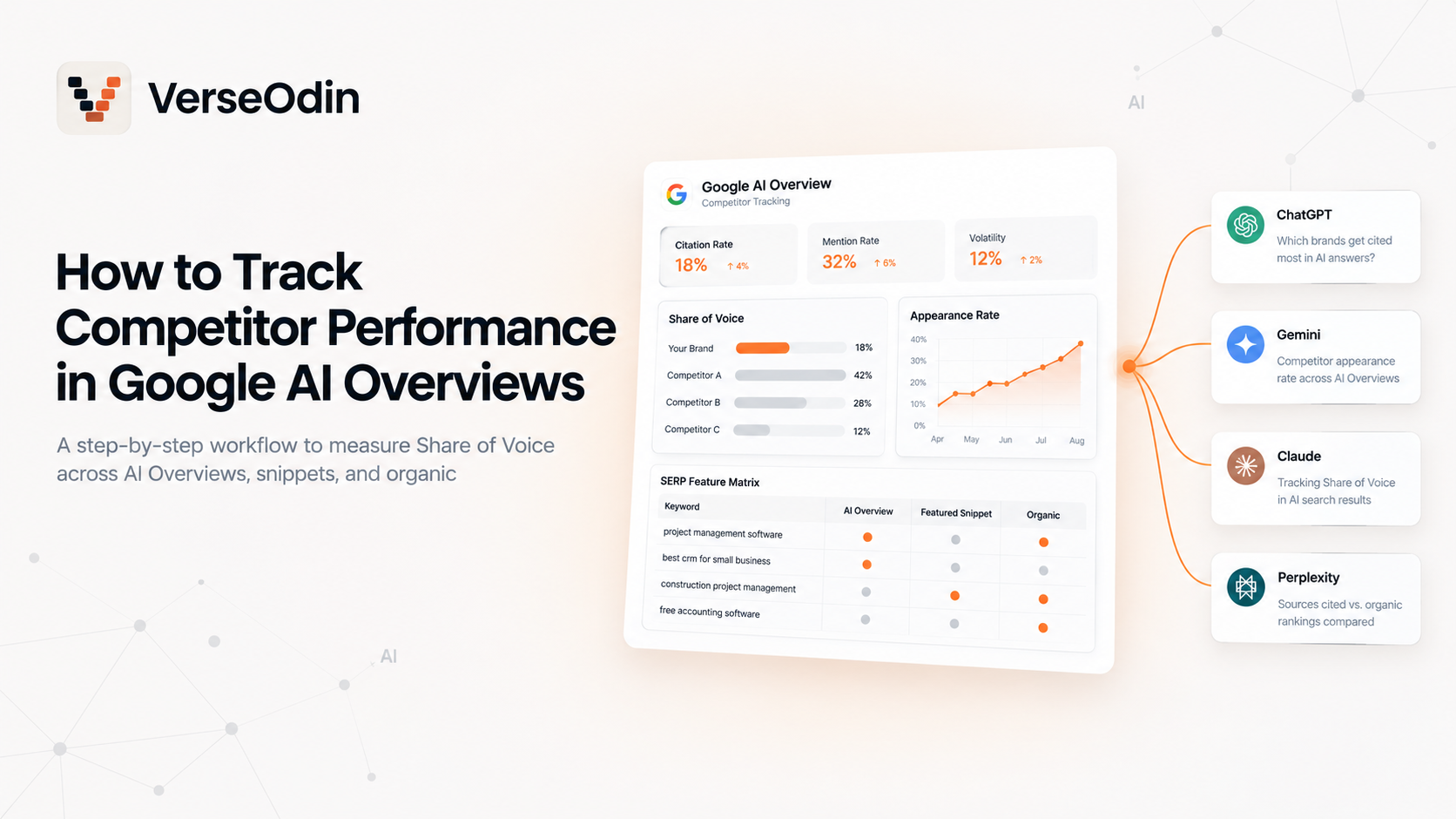
It is also worth being precise about one common mix up: Gemini and Google AI Overviews are not the same source pool, even though they share the same underlying model family and much of Google's trust framework. A brand can be well cited inside the standalone Gemini app and still be thin or absent inside AI Overviews on a Google results page, or the reverse, which is one more reason to treat Gemini search visibility as its own thing worth tracking directly rather than assuming AI Overviews performance tells the whole story. Our breakdown of LLM visibility covers how this plays out across ChatGPT, Gemini, Claude, and Perplexity more broadly.
Better Ways to Measure Your Brand Presence in Gemini Answers
Manually typing a prompt into Gemini and reading the answer tells you something happened once. It does not tell you whether that result holds up over time or across the range of questions your buyers actually ask. Measuring brand visibility in Gemini properly means treating it like an ongoing metric, not a one time check.
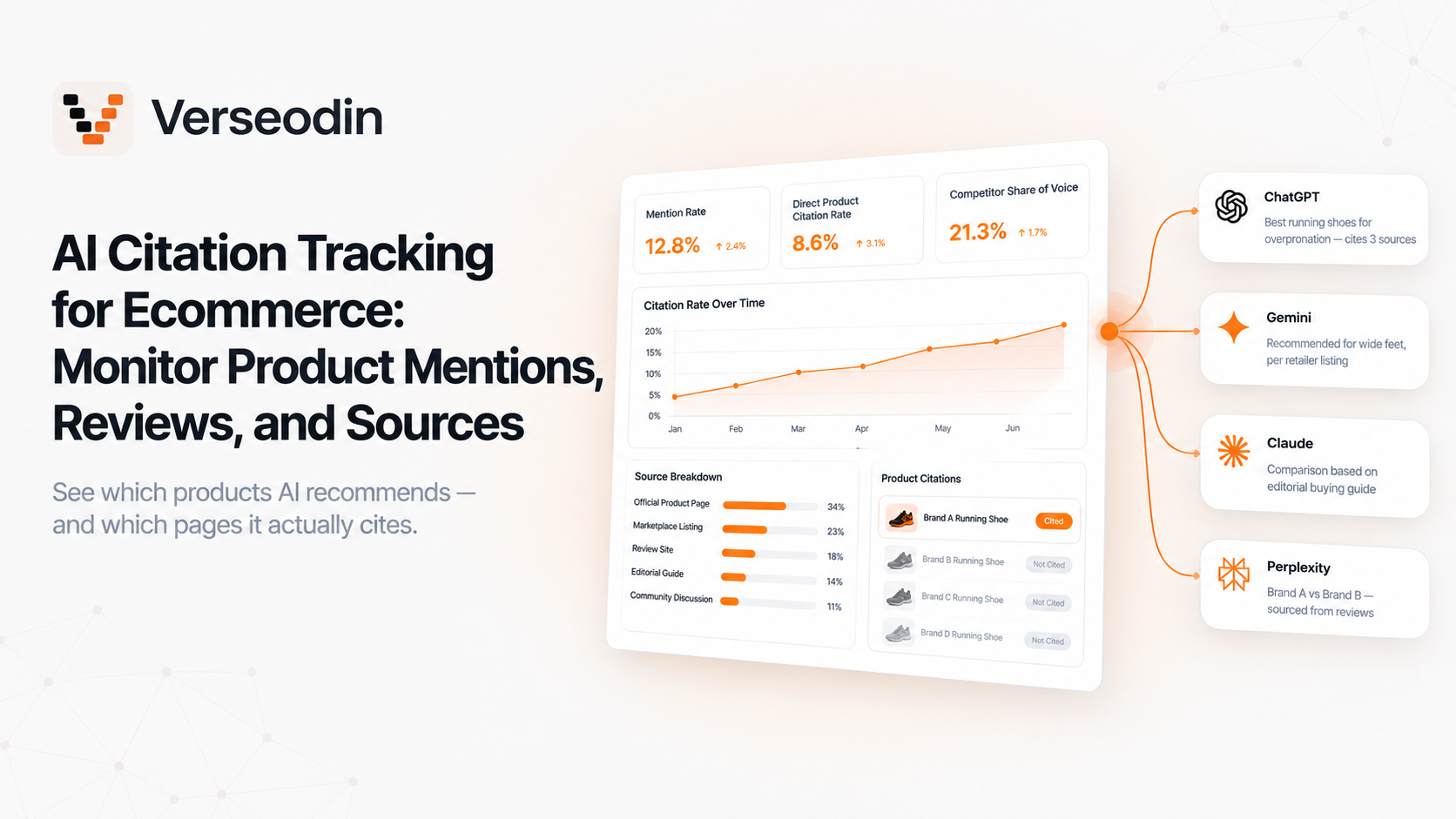
- Separate mention rate from citation rate: Mention rate is how often your brand name shows up in a Gemini answer at all. Citation rate is how often Gemini actually links back to a page on your domain as the source. The two move independently, and both matter.
- Track share of voice against named competitors: Visibility is relative. Knowing your own mention rate in isolation tells you far less than knowing how often you appear next to, above, or instead of the competitors your buyers are also considering.
- Build a realistic prompt set: Track the actual informational, comparison, and recommendation questions buyers ask around your category, not just searches for your brand name by itself.
- Watch change over time: Gemini's citation sets shift as content ages, competitors publish, and the underlying model updates, so a single snapshot understates how much ongoing tracking actually matters.
- Tie measurement to action: The most useful output is not a score. It is a specific prompt where a competitor is cited and you are not, since that gap points directly at which page, FAQ, or schema update to prioritize next.
Our guide to AI search visibility metrics breaks down how mention rate, citation rate, and share of voice are typically benchmarked in more detail. Platforms like Verseodin exist to make this loop measurable, running a defined prompt set across Gemini and other major AI engines on a recurring schedule so you can see what is actually working instead of guessing.
Try it with your own website
See the prompts real buyers ask AI assistants in your category.
Frequently Asked Questions
What is answer engine optimization (AEO) and how is it different from traditional SEO?
AEO is the practice of optimizing content so AI systems like Gemini, ChatGPT, and Perplexity mention and cite a brand inside a generated answer, rather than optimizing a page to rank on a results list. Traditional SEO measures where a page sits among a list of links. AEO measures whether an AI system chooses to name and link a brand at all when it answers a related question. The two overlap heavily, since Gemini still leans on Google's search index, but they are not the same goal.
Is Gemini the same as Google AI Overviews?
No. Gemini and Google AI Overviews share the same underlying model family and much of Google's trust and ranking infrastructure, but they are separate surfaces with different retrieval behavior. The standalone Gemini app draws from a broader slice of the open web for a given prompt, while AI Overviews sits inside a Google Search results page and leans more heavily on the live organic rankings for that exact query. A brand can be well cited in one and largely absent from the other.
How long does it take to see a change in Gemini visibility after publishing new content?
There is no fixed timeline. It depends on how quickly Gemini's retrieval layer revisits a page and how competitive the prompt is. Narrow, specific questions with less competition can pull in new content within weeks, while broad, high competition prompts take longer since they depend on established authority and consistent signals across many pages. Tracking a defined prompt set on a recurring schedule is the only reliable way to see the real timeline for a specific brand.
Can a smaller or newer brand earn Gemini citations against larger, more established competitors?
Yes, particularly on narrow, specific prompts rather than broad head terms. Because Gemini can break a complex question into smaller parts and pull a different source for each one, a smaller brand's clearly written page on a specific subtopic can earn a citation even where it would never outrank a larger competitor on a broad keyword. Clarity and consistency matter more here than sheer domain size.
What is the difference between a Gemini mention and a Gemini citation?
A mention is when Gemini says a brand's name inside its answer, which can come from what the model already knows rather than a live source. A citation is when Gemini links directly to a page on the brand's own domain as the source behind a specific claim. The two can happen together or separately, and tracking both gives a fuller picture of brand visibility in Gemini than watching either one alone.