An LLM visibility tool is a platform that tracks how often and how favorably a brand appears in AI generated answers from engines like ChatGPT, Gemini, Claude, and Perplexity. It works by running a defined set of buyer relevant prompts on a recurring schedule, then measuring brand mentions, citation rate, share of voice against competitors, and sentiment or positioning within those answers.
Unlike traditional SEO tools, which measure page rankings in a search results list, an LLM visibility tool measures whether a brand is actually named or cited inside a synthesized AI answer, since a page can rank well on Google and still be completely absent from ChatGPT or Gemini responses on the same topic.
A few years ago, tracking your search presence meant checking rankings on Google. Today, a growing share of your buyers are asking ChatGPT, Gemini, Perplexity, or Claude what to use instead of typing a query into a search bar, and there is no ranking report that tells you whether your brand made it into that answer. This gap is exactly what an LLM visibility tool is built to close.
This guide walks through what LLM visibility actually means, why brands increasingly need dedicated AI brand monitoring rather than relying on classic SEO dashboards, the core features that separate the best llm visibility tools from a basic tracker, how these platforms actually collect and analyze AI mentions behind the scenes, what to weigh when choosing a tool for your team or agency, and how to turn the data these tools surface into real gains in brand mentions and citations. We will also touch on pricing, since that is one of the most common questions teams have before committing to a platform.
Why Brands Need an LLM Visibility Tool in the AI Search Era
Brands need an LLM visibility tool because AI answer engines like ChatGPT, Gemini, Claude, and Perplexity decide who gets mentioned and cited, and traditional SEO tools cannot see or measure that. A dedicated LLM visibility tool tracks brand mentions, citation rate, and share of voice across these engines, giving marketing teams visibility into a channel that was previously invisible to them.
Search used to work like a list. You typed a question, got ten ranked results, and clicked one. AI answer engines work differently. They synthesize a single response from a handful of sources and present it as one answer, sometimes with citations and sometimes without. If your brand is not part of that synthesized answer, you are not just ranked lower, you are simply absent from the conversation your buyer is having with the AI.
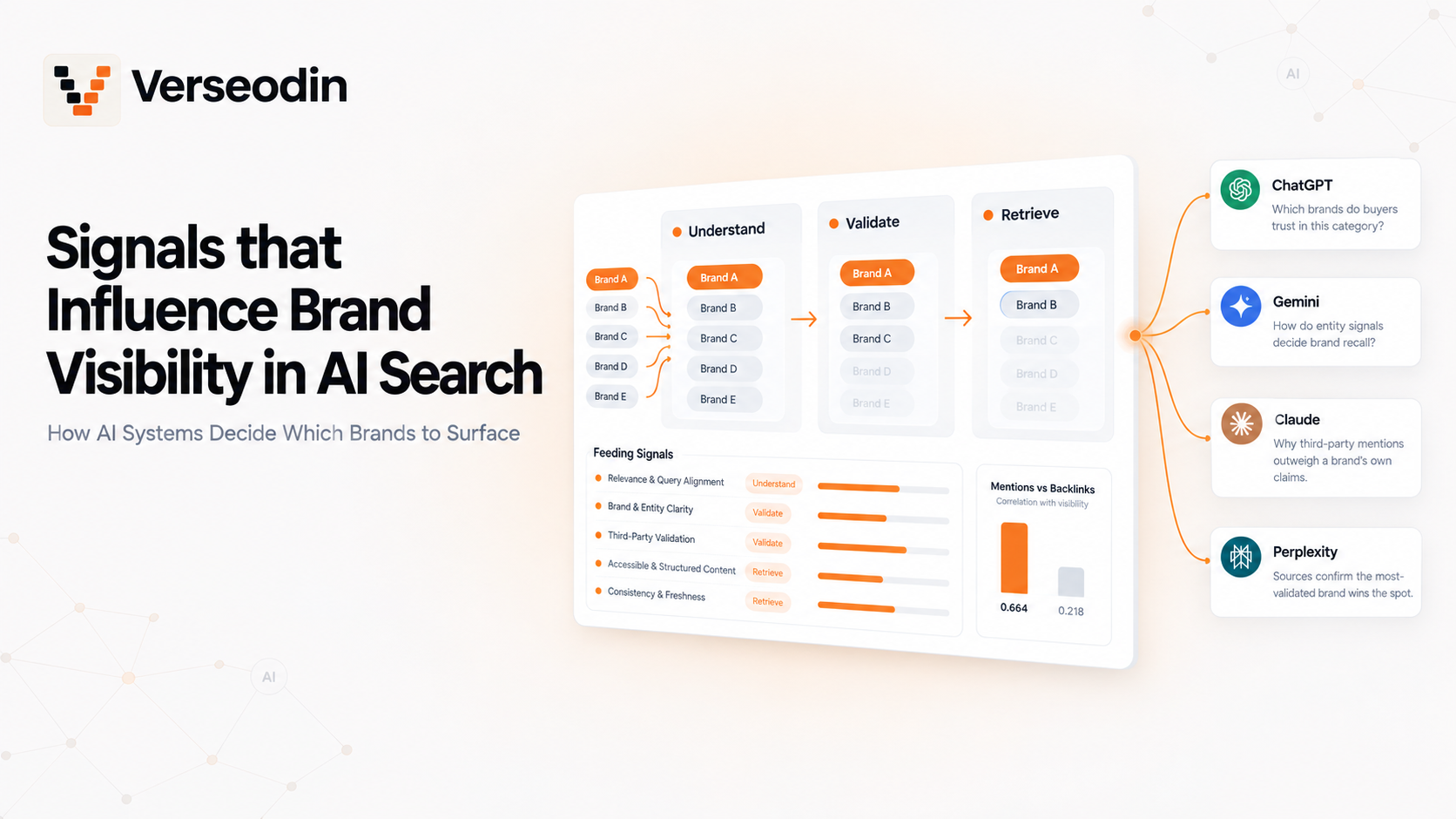
This matters because AI search visibility does not correlate cleanly with traditional rankings. A brand can hold position one on Google and still be missing entirely from ChatGPT or Gemini answers on the exact same topic, because these systems weigh recognition, trust, and entity signals differently than a classic ranking algorithm does. Our earlier piece on how AI models decide which brands to mention goes deeper into the specific signals that drive this, and it explains why some category leaders get quietly skipped while smaller competitors get named instead.
The practical problem this creates is that standard marketing analytics were never built to see inside a chat interface. Google Analytics shows you what happens after someone clicks through to your site, not what an AI model said about you before that click ever happened, if it happened at all. An LLM visibility tool exists to fill that specific blind spot, giving marketing and SEO teams a way to see, measure, and act on something that used to be invisible.
What an LLM Visibility Tool Actually Tracks
At its core, LLM visibility is about answering one question repeatedly and consistently: when a real buyer asks an AI model something relevant to your category, does your brand show up, and how? A proper tool tracks several layers underneath that question rather than a single score.
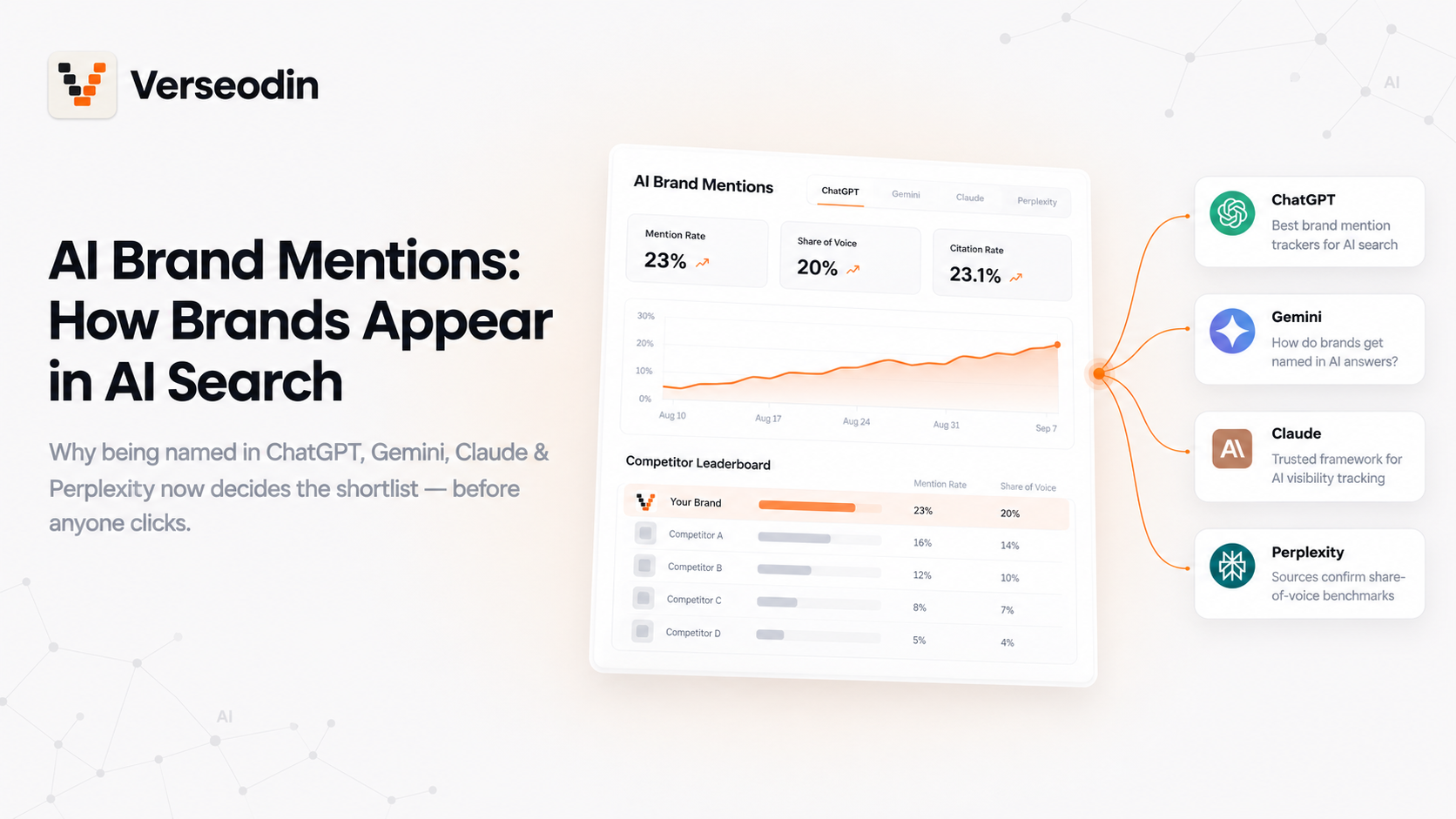
Brand mentions are the most basic signal, meaning how often your brand name appears in AI generated answers across a defined set of prompts. Citation rate goes a step further, tracking how often an AI answer links to or names your specific pages as a source, which is a stronger trust signal than a mention alone. Share of voice compares your mention volume against named competitors across the same prompt set, turning a raw count into a competitive position. Prompt coverage tracks which of your tracked questions you are winning versus losing entirely. Positioning and sentiment capture how you are described when you do appear, since being mentioned as a caveat is very different from being mentioned as the recommended option. Most dashboards also track change over time, since a single snapshot tells you far less than a trend line showing whether your visibility is climbing or slipping.
Our guide to the AI visibility metrics that actually matter breaks each of these down in more detail if you want a fuller picture of how to read them once you have a dashboard in front of you.
Essential Features Every LLM Visibility Tool Should Include
Not every tool on the market covers the same ground, and the feature gaps tend to show up right when you need the data most. A few capabilities are worth treating as non negotiable when evaluating options.
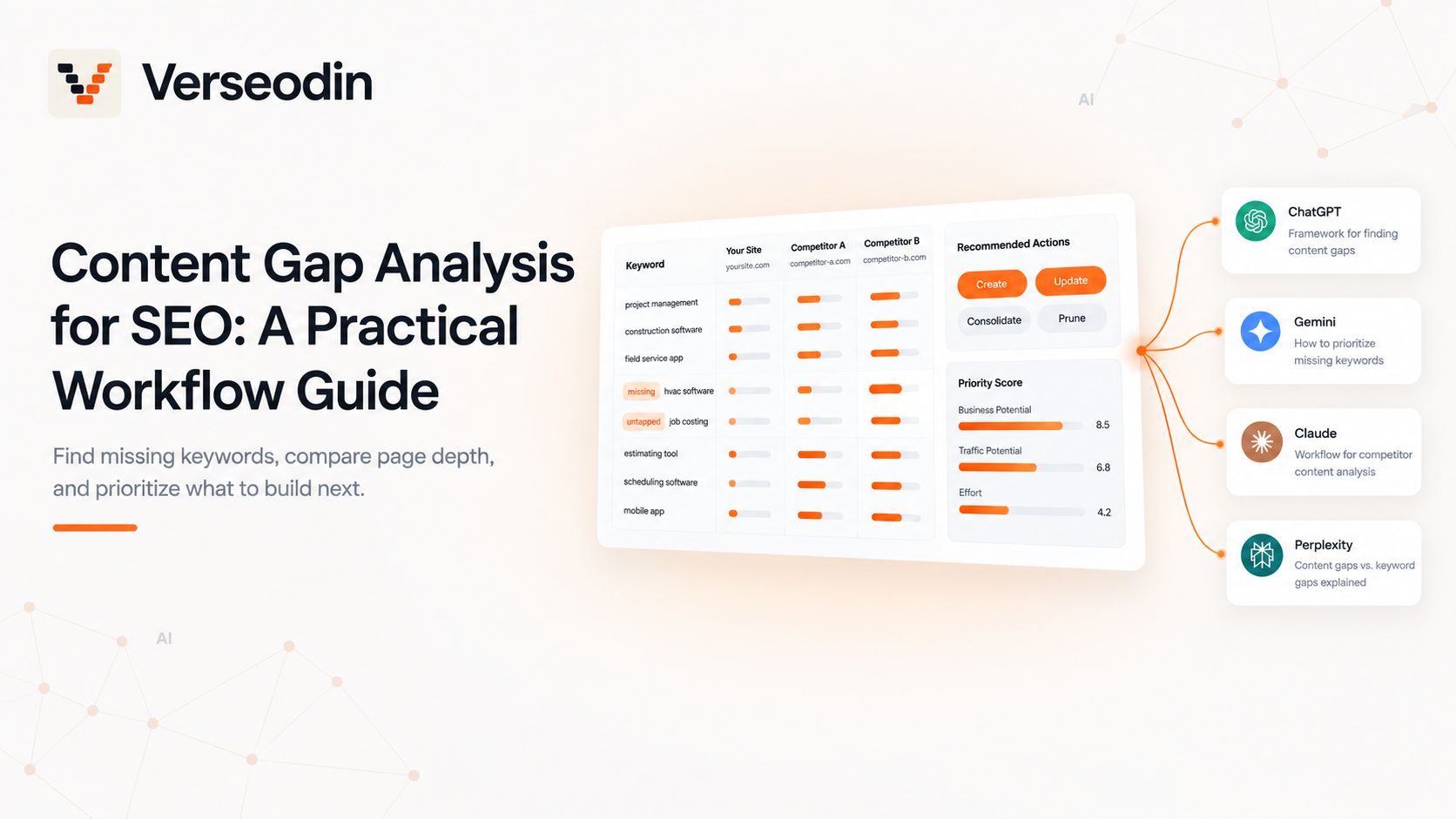
Multi engine coverage matters first, since ChatGPT, Gemini, Claude, Perplexity, Grok, and Copilot behave differently and cite sources at different rates. A tool that only checks one engine gives you a partial and potentially misleading picture. Prompt tracking at scale is just as important, since a handful of manually checked questions cannot represent the hundreds of ways a real buyer might phrase a query across the awareness, consideration, and decision stages. Citation analytics, meaning a clear map of which specific pages get cited and which get overlooked, turns raw visibility data into something a content team can act on. Competitor intelligence benchmarks your share of voice against named rivals rather than reporting your numbers in isolation. Some platforms also offer a form of gap or blindspot analysis that flags exactly where your competitors are winning mentions and you are not, which is genuinely useful, though it is worth treating as one feature among several rather than the entire pitch. Real time alerting and historical trend tracking round things out, since visibility changes as models update and as new content gets indexed, and you want to know when that happens rather than discovering it a quarter later.
For a deeper look at how these features tie back to actual answer engine optimization work, our complete guide to answer engine optimization strategies covers the technical foundations that make a tool's data meaningful in the first place.
How LLM Visibility Tools Collect and Analyze AI Mentions
Understanding how this data actually gets generated helps explain why the methodology matters as much as the dashboard. It starts with a prompt set, a curated list of the real questions target buyers would plausibly ask an AI model about your category, spanning comparison questions, feature specific questions, and general recommendation questions. A thin prompt set of five or ten queries will not represent your category well, which is why most serious tools track hundreds or thousands of prompts on a recurring schedule rather than a one time check.
Those prompts are then run systematically against each supported AI engine, and the resulting answers are parsed to detect brand mentions, extract any cited sources or links, and classify how the brand was described. This is more involved than a simple keyword search, since a mention needs to be attributed correctly and a citation needs to be distinguished from a passing reference. Different engines also behave differently here. Perplexity tends to include external links in a large share of its answers, while ChatGPT links out far less often even when it names a brand, so a tool needs engine specific handling rather than one blanket method applied everywhere. All of this gets aggregated over time so that a single mention becomes part of a trend rather than an isolated data point.
How to Choose the Right LLM Visibility Tool for Your Team
The right tool depends heavily on who is using it and at what scale. A single brand marketing team, an agency managing several clients, and an enterprise tracking dozens of markets all have genuinely different requirements, even though the underlying data looks similar on the surface.
For a single team, the priority is usually clarity over complexity, meaning a manageable prompt set, straightforward reporting, and a clear path from insight to a content brief you can actually execute. For agencies, llm visibility for agencies typically comes down to whether the platform supports isolated multi client workspaces, permission controls, and reporting that can be exported or white labeled for client calls, since juggling client data inside a single undivided workspace quickly becomes unmanageable. Larger or enterprise teams tend to need custom prompt scale, dedicated support, and integration into existing reporting workflows rather than a self serve dashboard alone. Our breakdown of how enterprise teams measure and improve AI discovery covers what that looks like at scale.
Pricing is also a real factor, and it varies more than most buyers expect. As one example of how these platforms are typically priced, Verseodin's Starter Monitoring plan runs 799 dollars per month, or 7,990 dollars billed annually, and includes dashboard access, citation tracking, monthly audits, and async support, while enterprise pricing is custom and scales with prompt volume and dedicated strategist support. Most platforms in this category, including Verseodin, also offer a free trial period so you can see real data on your own brand before committing to a paid plan. If you want to compare how different platforms approach coverage and workflow before deciding, our platform comparison for AI search visibility tools is a useful side by side reference.
Turning AI Visibility Insights into Higher Brand Mentions and Citations
Tracking alone does not move your numbers. The value of an LLM visibility tool comes from what your team does with the gaps it surfaces. A good workflow treats every tracked prompt where you are missing or losing to a competitor as a specific, addressable task rather than a vague area for improvement.
Try it with your own website
Check whether AI engines can reach, read and recommend your pages.
In practice, that means using the content gap findings to brief new pages or rewrite existing ones so they answer the exact question a model is trying to synthesize an answer for, strengthening the entity and citation signals on pages that are close to being picked up but are not quite trusted enough yet, and building the kind of third party presence, through credible mentions on forums, review sites, and industry publications, that AI models draw on when they decide who to cite. None of this is a single project with an end date. Models update, competitors publish new content, and the prompt landscape shifts, so the highest performing teams treat this as a recurring cycle of tracking, fixing, and re checking the same prompts to confirm whether visibility actually improved.
Frequently Asked Questions
What is an LLM visibility tool?
An LLM visibility tool is a platform that tracks how often and how favorably a brand appears in AI generated answers from engines like ChatGPT, Gemini, Claude, and Perplexity, using a defined set of buyer relevant prompts run on a recurring schedule.
How is LLM visibility different from traditional SEO tracking?
Traditional SEO tracking measures where a page ranks in a search results list. LLM visibility measures whether a brand is mentioned or cited inside a synthesized AI answer, which depends more on entity recognition, trust signals, and content structure than on classic ranking factors alone.
What are the best llm visibility tools to consider?
The strongest tools in this category cover multiple AI engines rather than one, track prompts at meaningful scale, offer clear citation and competitor benchmarking, and turn gaps into actionable content briefs rather than just reporting raw numbers.
Are there free llm visibility tools available?
Manually running a small set of representative prompts through ChatGPT, Perplexity, Gemini, and Claude and recording the results is a free way to get a rough baseline. Most dedicated platforms, including Verseodin, also offer a free trial period so you can see real tracked data before paying anything.
How much does llm visibility pricing typically cost?
Pricing varies by platform and scale. As one reference point, Verseodin's entry level Starter Monitoring plan is 799 dollars per month, or 7,990 dollars per year, while enterprise pricing is custom based on prompt volume and support level. Many platforms also offer a free trial before any payment is required.